Lynx Defense

Popular Searches

🔍

No results found

Try a different search term or browse our categories

to navigate Enter to select Esc to close
Account
USA Flag American-made, from our shop in North Carolina North Carolina Flag
Best AR-15 Triggers
Guides 20 min read

BEST AR-15 TRIGGERS

MS
Michael Savage
Published: | Updated:

When upgrading your AR-15, few things make as big a difference as a quality trigger.

Whether you're looking to shave time off your split shots, tighten your groups, or just enjoy a smoother shooting experience, the right trigger can transform your rifle.

But with so many options, finding "the one" can feel like a wild goose chase.

Don't worry—we've got you covered.

In this article, we'll break down the best AR-15 triggers for every need, from precision shooting to budget-friendly picks, so you can get back to what matters: sending rounds downrange with a smile on your face.

AR-15 Trigger Comparison Chart

Here's a quick comparison of all the triggers we tested to help you find the right one for your build:

Trigger Type Pull Weight Style Price Range Best For
Geissele G2S Two-Stage 4.5 lbs Curved $$ All-Around
LaRue MBT-2S Two-Stage 4.5 lbs Curved/Flat $ Best Value
PSA Custom Flat Single-Stage 3.5 lbs Flat $ Budget Builds
Geissele SSA-X Two-Stage 4.75 lbs Flat $$$ Premium Builds
CMC 3.5lb Single-Stage 3.5 lbs Curved/Flat $$ Drop-In Upgrade
Timney Impact Single-Stage 3-4 lbs Curved $$ Competition
Rise Armament RA-434 Single-Stage 3.5 lbs Curved $$ Fast Shooting
ALG Defense ACT Single-Stage 6 lbs Curved $ Mil-Spec Upgrade
Velocity 3lb Single-Stage 3 lbs Curved $$ Competition
TriggerTech Adaptable Single-Stage 2.5-5 lbs Curved/Flat $$$ Precision

Price Key: $ = Under $100 | $$ = $100-$175 | $$$ = $175+

Top AR-15 Triggers

Triggers can be one of the more hotly contested accessories in the firearm space.

People get very opinionated about their triggers, so I'm sorry if we didn't pick your favorite.

There are many good triggers, but these are the ones I have had the most time behind and the ones I recommend from personal experience.

Let's dive in!

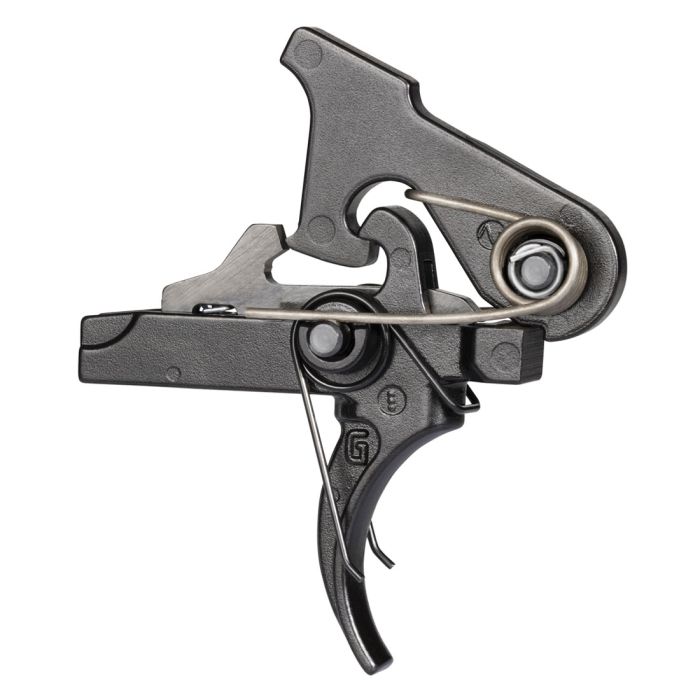
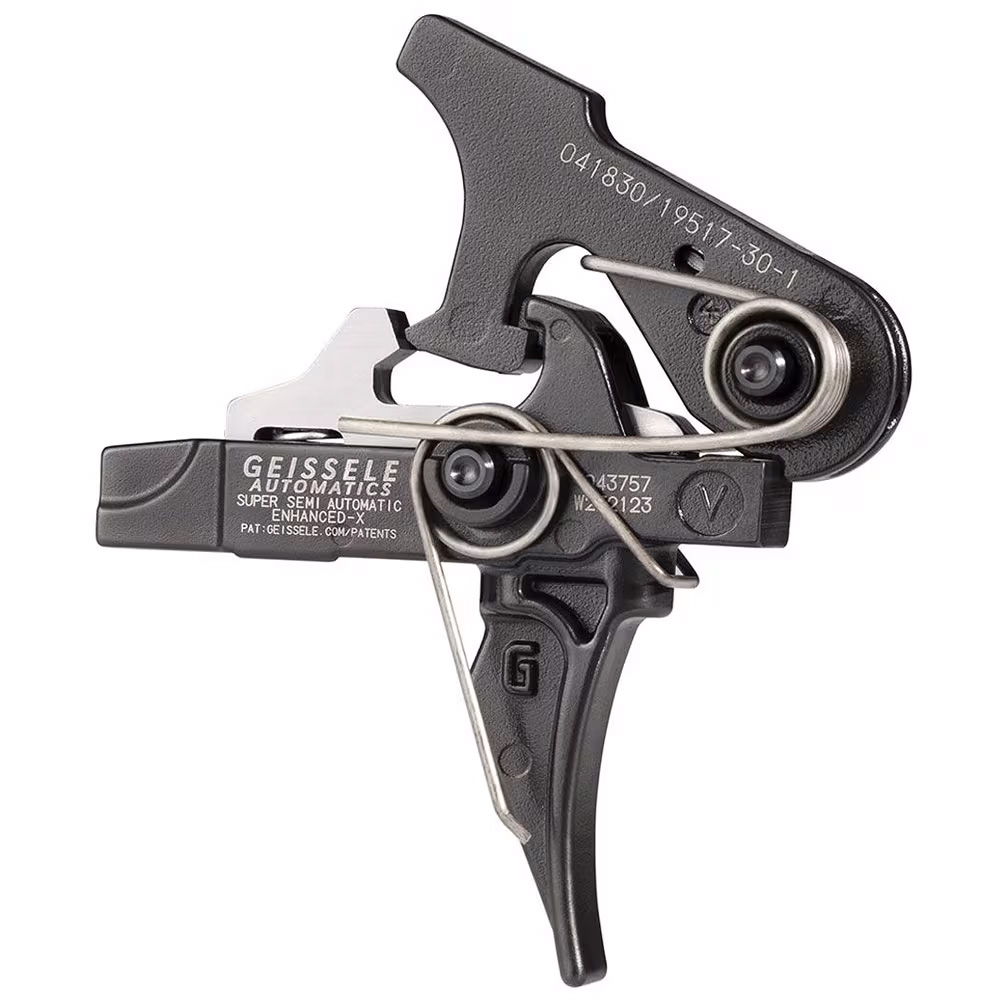
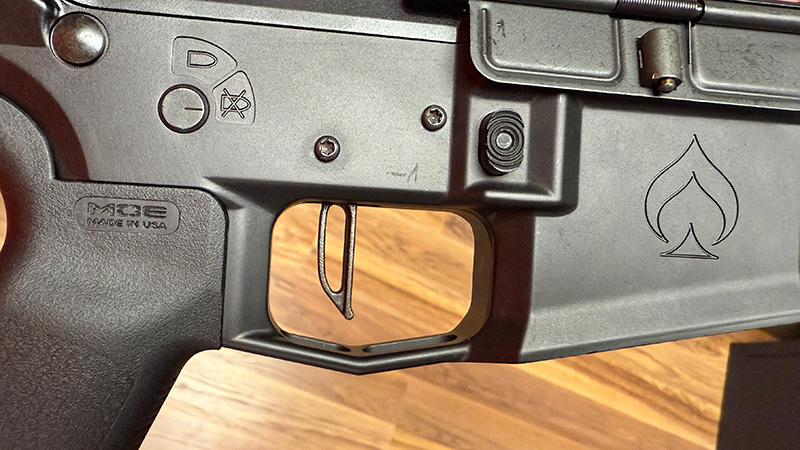
Geissele 2 Stage (G2S) Trigger

G2s Trigger

The G2S is Geissele's version of a base model vehicle. No frills, no heated seats, no power windows just a solid crisp, clean 2-stage trigger.

Since this is a two stage trigger there are two pull weights. The 1st stage is between 2.75 - 3 lbs.

The second stage is 1.5 -1.75 lbs, leaving the total pull weight range between 4.25-4.75 lbs.

This is not an adjustable trigger so that pull weight will be what it is.

The Geissele triggers are made from steel, which makes them extremely durable.

These triggers are great for any gun and fit both AR15 and AR10 platforms.

They are great for duty-level rifles and also just plinking guns, although a little pricey for just a plinker.
Best Values
Geissele G2s

Geissele G2S

Trigger TypeCurved
Pull Weight4.5 lbs.
Pull TypeTwo-Stage

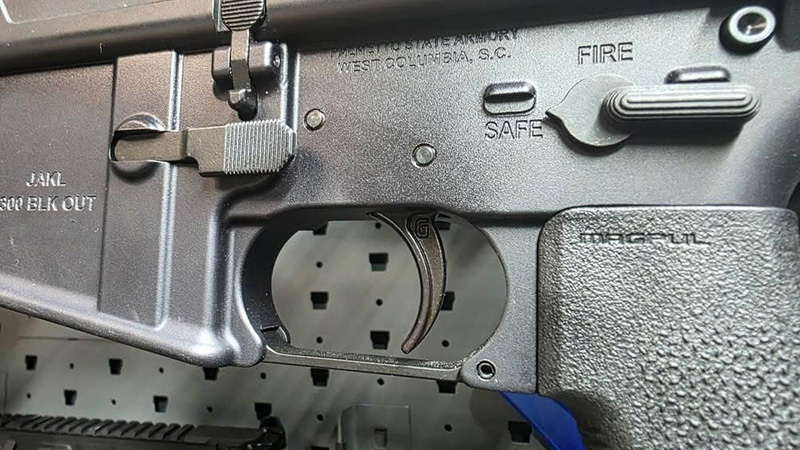
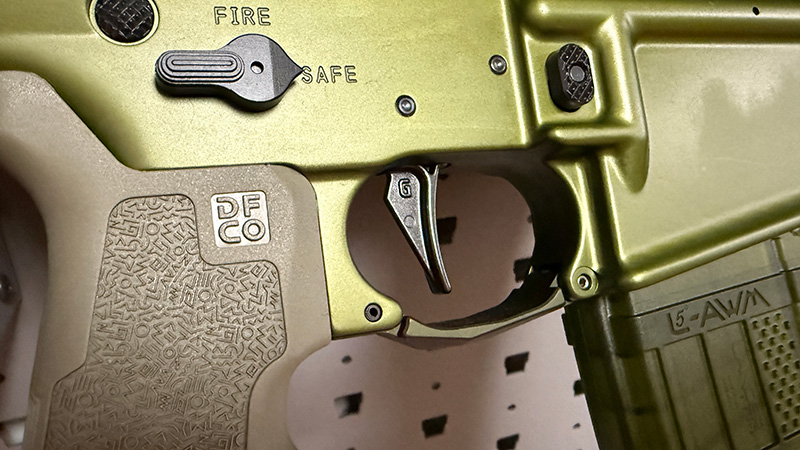
PSA Custom AR Trigger Single-Stage Flat

Psa Custom Trigger

One of the best budget aftermarket triggers is made by our good friends over at Palmetto State Armory.

This trigger is very similar in price to the LaRue trigger but slightly lower, making a solid single-stage flat trigger obtainable for any and all of your AR builds.

The biggest difference between this trigger and the other triggers on our list is that the PSA trigger is a single-stage trigger.

That means it has no take-up before the break.

This trigger is not adjustable and comes in at 3.5 lbs trigger pull.

The PSA Custom trigger comes with anti-walking pins which can be a little controversial.

Many will say if the trigger pins are walking out of the lower than something isn't in spec and while they are technically correct, it may not be the trigger.

Keep in mind that this is a drop-in trigger that needs to go into any number of lowers, which may be out of spec and cause the trigger pins to walk.

The first place the customer will look for support is PSA, so adding the anti-walking pins is probably just to minimize the customer service issues.

This trigger has a really good feel; you'd never know it wasn't a more expensive option.

I currently run this in my test bed rifle.
Best Values
Psa Flat Trigger

PSA Single Stage Flat

Trigger TypeFlat
Pull Weight3.5 lbs.
Pull TypeSingle-Stage

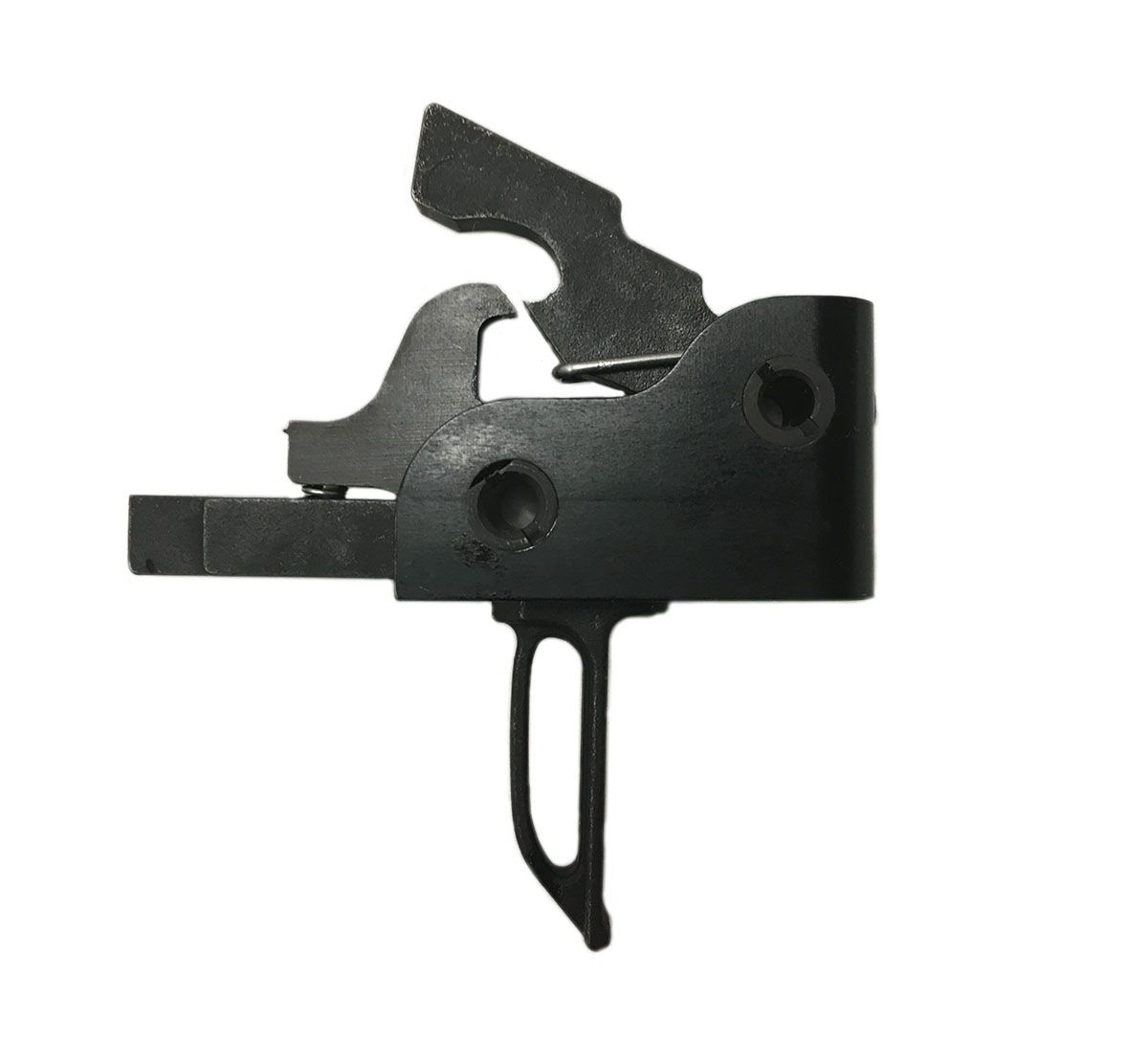
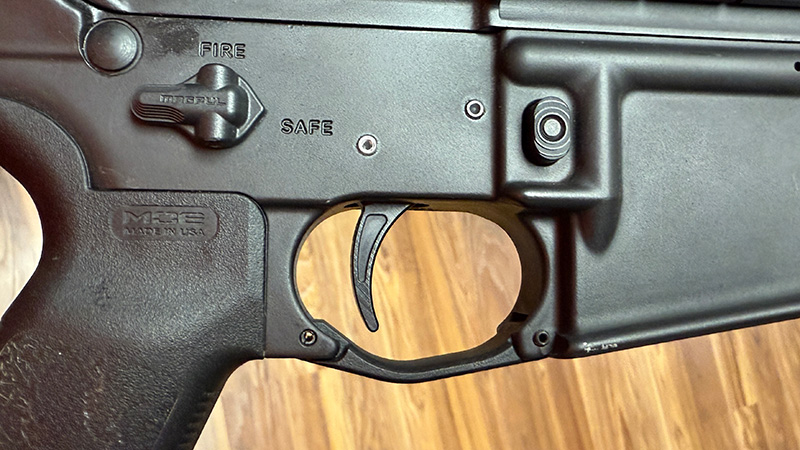
SSA X Trigger with Lightning Bow

G Ssa Bow Trigger

The Geissele SSA X Trigger with Lightning Bow is one of my favorite aftermarket AR-15 triggers.

In recent years, I have fallen in love with the straight triggers over the typical curved design.

I like the feel better and I feel like you can feel the breaks in the trigger better with a flat trigger.

The SSA X Trigger is at the top end of Geissele's trigger offering and the price reflects that.

The Lightning is a 2 stage trigger with the first stage being 2.75 - 3 lbs. the second stage is 1.5 - 1.75 lbs. making the total pull 4.25 - 4.75 lbs.

Like most of Geissele's triggers this trigger is not adjustable.
Best Values
Geissele Lightning Bow

Geissele SSA Lightning Bow

Trigger TypeFlat
Pull Weight4.75 lbs.
Pull TypeTwo-Stage

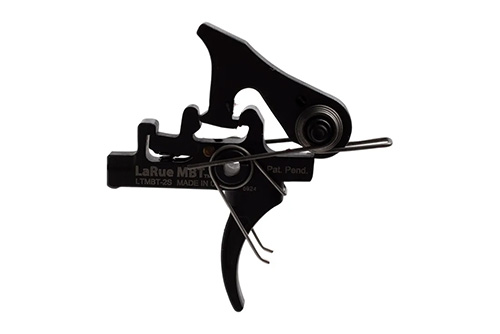
LaRue Tactical MBT-2S Trigger

Larue Mbt Trigger

One trigger that I've liked for some time and have in my Gen 3 Noveske rifle is the LaRue MBT-2S.

You might have guessed from the "2S" that this is a two-stage trigger, and that would be a good guess.

This trigger has a 4.5 lb total pull weight and breaks crisply at 2.5 lb first stage, 2 lb second stage.

I've always liked my LaRue MBT and have to continue recommending them as they are a great and often affordable option.

Best Values
LT MBT 2S

Larue MBT-2S

Trigger TypeCurved
Pull Weight4.5 lbs.
Pull TypeTwo-Stage

CMC Triggers 3.5lb Single-Stage

CMC Triggers has been making drop-in trigger groups since 2003, and they've earned a solid reputation in the AR community.

The CMC 3.5lb single-stage is one of their most popular offerings, and for good reason. It's a true drop-in design that comes as a complete, self-contained unit. You literally remove your old trigger group and drop this one in—no fitting, no adjustment, no headaches.

The break on this trigger is exceptionally clean. There's virtually no creep or takeup before you hit the wall, and when it breaks, it breaks like glass. The reset is short and tactile, which makes it excellent for rapid follow-up shots.

CMC uses a proprietary coating process on their triggers that provides excellent corrosion resistance and a smooth pull. The housing is machined from aircraft-grade aluminum, keeping weight down while maintaining rigidity.

One thing I appreciate about CMC is their consistency. Every CMC trigger I've handled has felt virtually identical, which speaks to their quality control. You know exactly what you're getting.

Available in both curved and flat bow versions, with pull weights ranging from 2.5 to 6 pounds depending on the model.

Popular
CMC Triggers 3.5lb Single-Stage

CMC Triggers 3.5lb

Trigger TypeCurved/Flat
Pull Weight3.5 lbs.
Pull TypeSingle-Stage

Timney Impact AR Trigger

Timney has been in the trigger business since 1946, and their experience shows in the Impact AR.

This is a drop-in, single-stage trigger that comes factory set between 3 and 4 pounds. What sets Timney apart is their attention to the small details—the hammer and trigger are wire EDM cut, then hand-fitted and individually tested before shipping.

The Impact uses Timney's "Sear-Link" technology, which provides an exceptionally crisp break. The pull is smooth with zero creep, and the reset is short and positive. It's the kind of trigger that makes you a better shooter because it eliminates the variables that can throw off your shots.

The housing is machined from 6061-T6 aluminum, and the pins are hardened steel. Timney includes their patented Sear Engagement Adjustment, though it comes factory-set and most users won't need to touch it.

One thing worth noting: Timney's customer service is legendary. If you ever have an issue, they'll take care of you. That peace of mind is worth something, especially on a critical component like your trigger.

If you're looking for a premium single-stage trigger that just works, the Timney Impact is hard to beat.

Trusted Brand
Timney Impact AR Trigger

Timney Impact AR

Trigger TypeCurved
Pull Weight3-4 lbs.
Pull TypeSingle-Stage

Rise Armament RA-434 High-Performance Trigger

Rise Armament's RA-434 is marketed as a "high-performance" trigger, and it lives up to the name.

This single-stage, drop-in trigger has a 3.5-pound pull weight with an incredibly short reset. Rise claims it has the "fastest split times in the industry," and while I can't verify that claim scientifically, I can tell you this trigger is fast.

The RA-434 uses a hardened tool steel hammer and trigger with a nickel-boron coating. This coating reduces friction and provides excellent corrosion resistance. The housing is aircraft-grade aluminum with a hard-coat anodized finish.

What makes this trigger special is the reset. It's not just short—it's aggressive. You feel it snap forward with authority, which makes it easy to ride the reset for fast follow-up shots. Competition shooters love this trigger for exactly that reason.

Rise includes anti-walk pins with every trigger, which I appreciate. The installation is straightforward and takes about 10 minutes with basic tools.

If you're into 3-gun competition or just want a trigger that helps you shoot faster, the RA-434 deserves serious consideration.

Fast Reset
Rise Armament RA-434 Trigger

Rise Armament RA-434

Trigger TypeCurved
Pull Weight3.5 lbs.
Pull TypeSingle-Stage

ALG Defense Advanced Combat Trigger (ACT)

The ALG Defense ACT is a unique entry in the AR trigger market. It's not a drop-in trigger—it's a mil-spec replacement that uses your existing trigger pins and springs.

ALG Defense was founded by Bill Geissele's wife Amy (yes, that Geissele), and they focus on providing quality upgrades at more accessible price points. The ACT is a perfect example of this philosophy.

At around $65, the ACT gives you significantly improved feel over a standard mil-spec trigger without breaking the bank. The pull weight is similar to mil-spec (around 6 pounds), but the feel is completely different. There's less grit, less creep, and a cleaner break.

ALG achieves this by using higher-quality materials and tighter tolerances than standard mil-spec triggers. The trigger and hammer are made from hardened steel with a nickel-boron coating for smooth operation.

This is an ideal upgrade for duty rifles, home defense guns, or budget builds where you want better-than-mil-spec performance but don't want to go full race trigger. It's also a great choice if you prefer the feel of a heavier trigger for safety reasons.

Installation is the same as any standard AR trigger—remove the old one, install the new one. No special tools or modifications required.

Budget Pick
ALG Defense ACT Trigger

ALG Defense ACT

Trigger TypeCurved
Pull Weight6 lbs.
Pull TypeSingle-Stage

Velocity Triggers 3lb Drop-In

Velocity Triggers may not have the brand recognition of Geissele or CMC, but they make a seriously good product.

Their 3lb drop-in trigger is one of the lightest single-stage triggers you can buy, making it popular with competition shooters who want every advantage they can get.

The trigger uses a roller bearing system that virtually eliminates friction, resulting in an incredibly smooth pull. The break is crisp and clean, and the reset is short and tactile.

At 3 pounds, this trigger is light enough for competition but not so light that it becomes dangerous for general use. That said, I wouldn't recommend it for a home defense gun—it's really designed for range and competition use where speed is the priority.

The housing is billet aluminum, and the trigger components are S7 tool steel with a black nitride finish. Build quality is excellent, and the trigger feels more expensive than it is.

Available in both curved and flat bow versions. If you're serious about competition shooting and want a trigger that won't hold you back, Velocity is worth a look.

TriggerTech AR-15 Adaptable

TriggerTech made their name in the precision rifle world, and their AR-15 triggers bring that same precision-focused design to the platform.

The Adaptable is their adjustable model, offering pull weights from 2.5 to 5 pounds. This gives you incredible flexibility to tune the trigger exactly to your preferences—or adjust it for different uses.

What makes TriggerTech unique is their Frictionless Release Technology. Instead of sliding surfaces, they use a roller that rolls off the sear. This eliminates the friction that causes creep and produces a remarkably consistent break.

The result is a trigger that feels almost mechanical—the same clean break every time, with no variation. For precision shooting, this consistency is invaluable.

The trigger and sear are made from 440C stainless steel with a PVD coating. The housing is billet aluminum. Everything about this trigger screams quality.

Yes, it's expensive. But if you're building a precision AR or want the absolute best trigger feel available, the TriggerTech Adaptable is hard to beat.

Premium
TriggerTech Adaptable AR-15 Trigger

TriggerTech Adaptable

Trigger TypeCurved/Flat
Pull Weight2.5-5 lbs. (Adjustable)
Pull TypeSingle-Stage

Single-Stage vs Two-Stage AR-15 Triggers: Which Is Right for You?

This is probably the most common question in the AR trigger world, and the answer depends entirely on how you plan to use your rifle.

Single-Stage Triggers Explained

A single-stage trigger has one consistent pull weight from start to finish. When you press the trigger, you immediately meet resistance, and the rifle fires when you overcome that resistance.

Pros:

  • Faster for rapid fire and competition
  • Simpler to learn and master
  • Shorter overall trigger travel
  • Better for close-range, dynamic shooting

Cons:

  • Less control for precision shots
  • Easier to accidentally discharge if you're not careful
  • Some find them "abrupt" feeling

Best for: Competition shooting, home defense, general plinking, shooters who prioritize speed over precision.

Two-Stage Triggers Explained

A two-stage trigger has two distinct phases. The first stage has light resistance (the "takeup"), and the second stage has heavier resistance before the break. You can pull through the first stage to prep the trigger, then apply additional pressure for the shot.

Pros:

  • Better for precision shooting
  • Reduced chance of accidental discharge
  • Allows you to "stage" the trigger for precise shot timing
  • Preferred by military for safety reasons

Cons:

  • Slower for rapid fire
  • More complex to master
  • Longer overall trigger travel

Best for: Precision shooting, hunting, designated marksman roles, shooters who prioritize accuracy over speed.

Which Should You Choose?

Here's my simple recommendation:

  • Home defense / duty rifle: Two-stage (safer under stress)
  • 3-gun / competition: Single-stage (faster)
  • Precision / long-range: Two-stage (better control)
  • General range use: Either works—personal preference
  • Hunting: Two-stage (allows staged trigger for precise shot timing)

If you're still unsure, start with a two-stage trigger. It's more versatile and teaches good trigger discipline. You can always switch to single-stage later if you find you want something faster.

Drop-In vs Mil-Spec Triggers: What's the Difference?

When shopping for AR-15 triggers, you'll encounter two main types: drop-in triggers and mil-spec replacement triggers. Understanding the difference will help you make the right choice for your build.

What Is a Drop-In Trigger?

A drop-in trigger is a self-contained unit that includes the trigger, hammer, disconnector, and springs, all housed in a single assembly. You remove your old trigger components and literally drop the new unit into your lower receiver.

Advantages:

  • Easy installation (10-15 minutes, no special tools)
  • Factory-tuned and tested—no adjustment needed
  • Consistent performance across different lowers
  • Can be easily transferred to another rifle

Disadvantages:

  • More expensive than mil-spec options
  • Adds slightly more weight
  • Some models require anti-walk pins

Popular drop-in triggers: CMC, Timney, Rise Armament, Velocity, most Geissele triggers.

What Is a Mil-Spec Replacement Trigger?

A mil-spec replacement trigger uses the same design as the standard AR-15 trigger but with improved materials and manufacturing. It uses your existing trigger pins and installs the same way as any standard AR trigger.

Advantages:

  • Less expensive
  • No additional parts needed
  • Familiar installation for anyone who's worked on an AR
  • Lighter weight than drop-in units

Disadvantages:

  • Installation takes longer
  • May require pin fitting on some lowers
  • Performance can vary slightly based on lower receiver tolerances

Popular mil-spec triggers: ALG Defense ACT and QMS, Geissele G2S (technically uses drop-in housing but mil-spec design), BCM PNT.

Which Type Is Better?

Neither is objectively "better"—it depends on your priorities.

Choose a drop-in trigger if you want the easiest possible installation, guaranteed consistent performance, and don't mind paying extra for convenience.

Choose a mil-spec replacement if you're on a budget, prefer traditional designs, or want to keep your rifle as simple and lightweight as possible.

What to Look for in an AR-15 Trigger

What you want in a trigger will vary based on your specific wants and needs. But the things to consider are standard and here's what you should consider.

Intended Use

The most important factor to consider is the intended use of the firearm the trigger will be used in, as the firearm's use case will likely determine your trigger needs.

Whether for precision shooting or go-to AR-15, matching the trigger to specific use cases is paramount.

Selecting a trigger based on the intended use of the gun and your individual comfort with specific trigger features is the most important factor.

Pull Weight

Pull weight can be a hotly contested issue, and while some of it comes down to preference, there are a few factors that contribute to safety and accuracy.

Trigger pull weight is a critical factor in firearm performance, impacting shooting accuracy and style.

For competitive shooters, a lighter trigger pull weight allows for quicker shots.

In hunting scenarios, a moderate trigger pull weight may offer better control and the "surprise" you want in your trigger pull, giving you more accurate shots.

In home defense situations, a slightly heavier trigger pull weight can prevent accidental discharges while not negatively impacting your ability to discharge your firearm.

Trigger Materials

Trigger materials like steel, aluminum, and coatings such as nickel-boron are chosen for their durability and reliability, with solid S7 tool steel being a common choice.

The selection of materials can significantly impact the strength and tactile response of a trigger, influencing the overall feel and performance for consumers.

Adjustability

Adjustable triggers offer you the advantage of personalized customization, allowing for fine-tuning to suit individual preferences in travel and weight.

This feature can enhance accuracy, comfort, and overall shooting experience compared to non-adjustable triggers.

Adjustable triggers cater to a wide range of preferences by enabling users to modify the trigger pull weight, and travel.

On the flip side, adjustable triggers often add more failure points and often aren't recommended for a "go-to" or SHTF-style rifle.

Best Budget AR-15 Triggers (Under $100)

You don't have to spend $200+ to get a significant upgrade over your mil-spec trigger. Here are the best options for shooters on a budget:

1. LaRue Tactical MBT-2S ($87)

The LaRue MBT-2S is the undisputed king of budget AR triggers. At under $90, you get a two-stage trigger that rivals options costing twice as much. The break is crisp, the reset is positive, and the build quality is excellent. If you can only afford one upgrade to your AR-15, make it this trigger.

2. PSA Custom AR Trigger ($79)

Palmetto State Armory's in-house trigger punches way above its weight class. It's a drop-in single-stage with a 3.5lb pull that feels much more expensive than it is. Great for budget builds where you still want a quality trigger.

3. ALG Defense ACT ($65)

If you want to stay close to mil-spec but with noticeably better feel, the ACT is your answer. It's not a race trigger, but it's a substantial improvement over factory triggers at a very accessible price.

4. Rise Armament RA-140 ($99)

Just under the $100 mark, the RA-140 is Rise Armament's entry-level offering. It's a single-stage drop-in with a 3.5lb pull and nickel-boron coating. Excellent value for the money.

Best Premium AR-15 Triggers ($175+)

When money is no object and you want the absolute best, these triggers deliver:

1. Geissele SSA-X with Lightning Bow ($300+)

Geissele's flagship trigger for a reason. The combination of their refined two-stage design with the flat Lightning Bow is as good as it gets. This is the trigger that special operations units trust.

2. TriggerTech Adaptable ($220)

For precision shooters who want the cleanest possible break, TriggerTech's frictionless design is unmatched. The adjustability lets you dial in exactly the pull weight you want.

3. Geissele SD-E ($240)

The Super Dynamic Enhanced is Geissele's competition-focused trigger. It has a lighter second stage than the SSA, making it faster for high-speed shooting while retaining the benefits of a two-stage design.

4. Wilson Combat TTU ($200)

Wilson Combat's Tactical Trigger Unit is designed for precision work. It's a single-stage trigger with a 4lb pull that's remarkably consistent shot to shot.

Frequently Asked Questions

What is the best trigger for an AR-15?

The "best" trigger depends on your use case. For most shooters, the LaRue MBT-2S offers the best value—it's under $90 and performs like triggers costing twice as much. For premium builds, the Geissele SSA-E or SSA-X are industry standards. Competition shooters often prefer single-stage options like the CMC 3.5lb or Timney Impact.

Is a 3.5 lb trigger too light for an AR-15?

A 3.5 lb trigger is generally safe for range use and competition but may be too light for a dedicated home defense rifle. Lighter triggers are easier to accidentally discharge under stress. For home defense, most experts recommend staying at 4.5 lbs or higher. For competition and range use, 3-3.5 lbs is common and perfectly safe with proper trigger discipline.

Single stage or two stage for home defense?

Most trainers and experts recommend a two-stage trigger for home defense. The takeup in the first stage provides a margin of safety under the stress of a defensive situation—you're less likely to accidentally discharge the weapon. Two-stage triggers also encourage proper trigger discipline. Popular choices include the Geissele SSA and LaRue MBT-2S.

How much does an AR-15 trigger upgrade cost?

AR-15 trigger upgrades range from about $65 to $350+. Budget options like the ALG ACT ($65) and LaRue MBT-2S ($87) offer significant improvements over mil-spec triggers. Mid-range options like CMC and Timney run $130-$170. Premium triggers from Geissele, TriggerTech, and Wilson Combat cost $200-$350.

Is it hard to install an AR-15 trigger?

Drop-in triggers are very easy to install—typically 10-15 minutes with basic tools. You remove the old trigger components and literally drop the new unit into place. Mil-spec replacement triggers take a bit longer (20-30 minutes) and require the same process as installing any AR trigger: removing the old components and installing the new hammer, trigger, disconnector, and springs. No special tools are required for either type.

Curved or flat trigger: which is better?

This is purely personal preference. Curved triggers are the traditional design and feel natural to most shooters. Flat triggers provide a more consistent finger placement and some shooters feel they offer better control. Many triggers are available in both styles. If you've never tried a flat trigger, it's worth testing one before committing—many shooters who try flat triggers never go back.

Do AR-15 triggers need to break in?

Some triggers benefit from a brief break-in period, but most quality aftermarket triggers are ready to go out of the box. You may notice the trigger becomes slightly smoother after 100-200 rounds as the components polish themselves, but this is minor. If a trigger feels gritty or inconsistent after several hundred rounds, that's a sign of a quality issue, not a need for more break-in.

Do I need anti-walk pins with my trigger?

Some drop-in triggers include or require anti-walk pins to prevent the trigger pins from walking out during use. This typically indicates loose tolerances in either the trigger housing or your lower receiver. Many quality triggers don't require them. If your trigger manufacturer includes anti-walk pins, use them. If your pins start walking with a trigger that doesn't include them, you can buy aftermarket anti-walk or anti-rotation pin sets.

MS

Michael Savage

Michael Savage is the owner of Lynx Defense, a North Carolina-based company designing and producing American-made shooting and range gear.

Share This Article

📬

GET GEAR TIPS IN YOUR INBOX

Join shooters getting the latest gear guides, range tips, and exclusive deals every week.

No spam, ever. Unsubscribe anytime.