Lynx Defense

Popular Searches

Suggestions

Products

Articles & Reviews

Pages & Help

🔍

No results found

Try a different search term or browse our categories

to navigate Enter to select Esc to close
Account
USA Flag American-made, from our shop in North Carolina North Carolina Flag
What Does CCW Stand For? A Beginner's Guide to Concealed Carry
Guides 6 min read

WHAT DOES CCW STAND FOR? A BEGINNER'S GUIDE TO CONCEALED CARRY

Published: | Updated:

CCW stands for Concealed Carry Weapon. In practical terms, it means carrying a firearm on your person in a way that isn't visible to others. In most states, this requires a permit (often called a CCW permit, CHL, or CPL depending on the state), though a growing number of states now allow permitless or "constitutional" carry.

If you're thinking about carrying concealed, this guide covers what you need to know — from the permit process to the gear, the training, and the mindset.

How to Get a CCW Permit

The process varies by state, but typically involves some combination of:

  1. Submitting an application through your county sheriff or local law enforcement
  2. Completing a background check
  3. Taking a firearms safety or CCW-specific training course
  4. Providing fingerprints
  5. Paying an application fee (usually $50-$150)

Some states issue permits quickly, while others have lengthy waiting periods. Some require live-fire qualification, others only require classroom instruction. A handful of states are "may issue," meaning the issuing authority has discretion to deny even qualified applicants.

Check your specific state and county requirements before you start. Your local sheriff's office or state police website will have the current process.

Constitutional Carry

A growing number of states have adopted constitutional carry (also called permitless carry), which allows residents to carry concealed without a permit. Even in these states, many people still get their permit for two reasons: reciprocity when traveling to other states, and as proof of training if ever questioned by law enforcement.

Reciprocity: Carrying Across State Lines

Your CCW permit may or may not be recognized in other states. This is called reciprocity, and it varies widely. Some states honor permits from almost every other state. Some honor none. Some have agreements with specific states only.

Before you travel with a concealed firearm, check the laws of every state you'll pass through — not just your destination. What's perfectly legal in your home state could be a felony one state over. Several websites and apps track reciprocity maps, but laws change frequently, so verify before every trip.

Choosing a CCW Firearm

The "best" CCW gun is the one you'll actually carry every day. That usually means a compact or subcompact handgun that balances:

  1. Size and weight — Small enough to conceal comfortably under your normal clothing
  2. Caliber — 9mm is the most popular CCW caliber for good reason: manageable recoil, affordable ammunition, and proven terminal performance
  3. Capacity — Modern micro-compacts like the SIG P365, Glock 43X, and Springfield Hellcat offer 10-15 rounds in a very small package
  4. Reliability — A carry gun needs to go bang every time. Run at least 200-300 rounds through any firearm before you trust your life to it

Popular CCW choices include the SIG P365 family, Glock 19/43X, Smith & Wesson Shield, Springfield Hellcat, and the Ruger MAX-9. Try to handle and shoot several options before buying — grip angle, trigger feel, and sight picture are all personal preferences.

Essential CCW Gear

Holster

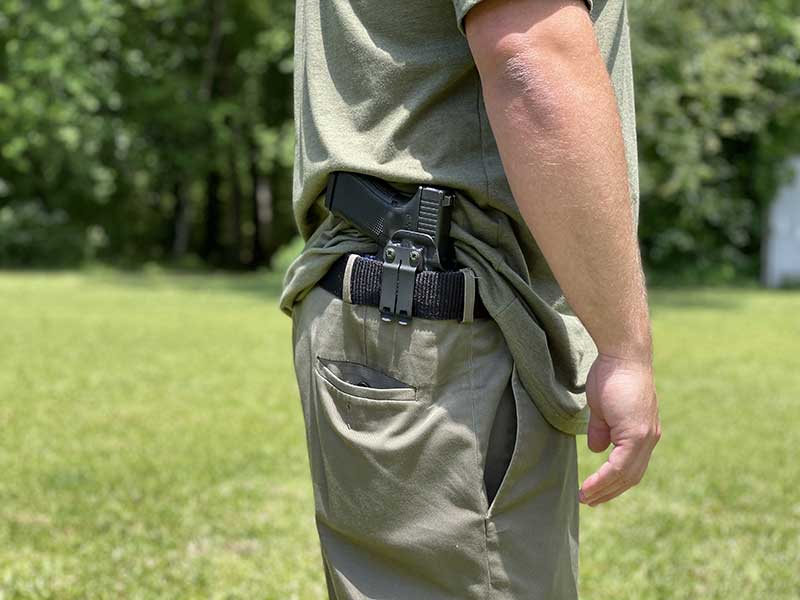
Your holster is arguably more important than the gun itself. A bad holster means you won't carry consistently. Look for:

  1. Kydex or quality hybrid construction — Rigid retention that covers the trigger guard completely
  2. Adjustable retention and cant — So you can fine-tune the draw angle and how tightly the gun is held
  3. Comfortable for all-day wear — If it digs, pinches, or shifts, you'll leave the gun at home

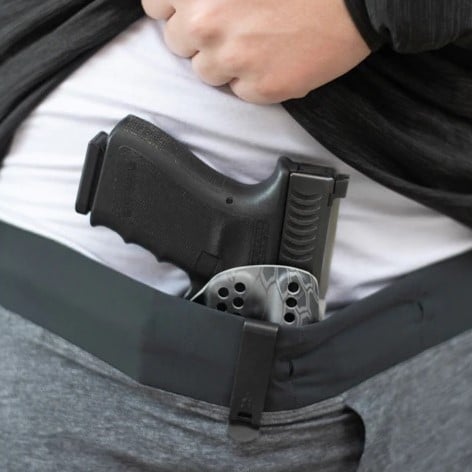
IWB (Inside the Waistband) is the most common carry position for concealment. Appendix carry (AIWB) has become increasingly popular for its fast draw and easy concealment. Harry's Holsters makes quality options worth checking out if you're shopping for your first or next holster.

Belt

A dedicated gun belt makes a bigger difference than most new carriers expect. Regular belts sag under the weight of a firearm and holster, which kills concealment and comfort. A quality gun belt — whether leather or nylon — is rigid enough to support the weight without flexing. Check out our best tactical belt guide for options.

Ammunition

Carry quality hollow-point defensive ammunition, not the FMJ (full metal jacket) range ammo you practice with. Popular choices include Federal HST, Speer Gold Dot, and Hornady Critical Defense. Run at least 50 rounds of your chosen carry ammo through your gun to confirm reliability — some firearms are picky about specific loads.

Medical Kit

If you carry a tool that can make holes, you should carry a tool that can plug them. A compact IFAK (Individual First Aid Kit) with a tourniquet and pressure bandage takes up minimal space and could save a life — yours or someone else's. According to our 2026 Range Day Report, 44% of shooters now carry an IFAK as standard equipment.

Backpack Carry for PDWs

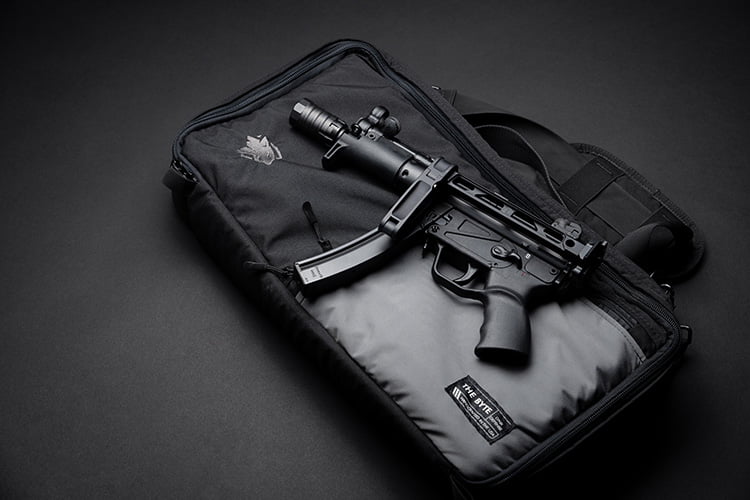
If you carry a PDW, folding-brace AR pistol, or other small backpack-carryable firearm, a dedicated insert keeps it separated from your everyday gear and ready to access. Our Policy backpack insert was designed specifically for this — it gives your PDW a dedicated, padded compartment inside any standard backpack.

Training: The Non-Negotiable

Everyone who carries a firearm should be proficient with it. No excuses.

Getting your CCW permit is not the finish line — it's the starting line. A permit means the state says you're allowed to carry. Proficiency means you can actually use the firearm effectively and safely under stress.

At minimum, you should:

  1. Take a defensive handgun course from a qualified instructor — not just the basic safety class required for your permit, but an actual defensive shooting course that covers drawing from a holster, shooting under stress, and decision-making
  2. Practice regularly — At least several times a year at the range, ideally monthly. Shooting fundamentals are a perishable skill
  3. Practice your draw — Dry-fire practice at home (with a verified empty firearm) builds the muscle memory you need
  4. Know your state's use-of-force laws — Understanding when you can and cannot use deadly force is just as important as marksmanship

Carrying a firearm is a serious responsibility. The gun doesn't make you safer — the training does.

Everyday Carry Mindset

Once you start carrying, a few things change:

  1. Dress around the gun. Your wardrobe may need minor adjustments. Slightly looser shirts, patterns over solids, and a good belt solve most concealment challenges.
  2. Avoid confrontation. When you carry, you lose every argument. Walk away from situations you might have engaged before. The gun is a last resort, not a confidence booster.
  3. Carry consistently. The gun you left at home because it was uncomfortable doesn't help you. Find a setup that works every day, not just when you feel like it.
  4. Stay current. Laws change. Your skills degrade. Commit to ongoing training and staying informed.

Getting Started

If you're ready to start the process:

  1. Look up your state's CCW requirements (your state police or sheriff's office website)
  2. Take a reputable CCW/defensive handgun course
  3. Choose a firearm you'll actually carry — rent or borrow before buying
  4. Get a quality holster and gun belt
  5. Run 200+ rounds through your carry setup to confirm reliability
  6. Practice your draw and presentation regularly
  7. Carry every day

Concealed carry isn't just about the permit or the hardware. It's a commitment to training, responsibility, and situational awareness. Get the permit, get the gear, and then put in the work.

Frequently Asked Questions

CCW stands for Concealed Carry Weapon. It refers to the practice of carrying a firearm on your person in a way that is not visible to others. Most states require a permit (also called a CHL or CPL), though some states allow permitless or constitutional carry.
The process varies by state but typically involves submitting an application, passing a background check, completing a firearms safety course, providing fingerprints, and paying an application fee (usually $50-$150). Check your local sheriff or state police website for specific requirements in your area.
The best CCW gun is one you will actually carry every day. Popular choices include the SIG P365, Glock 43X, Smith & Wesson Shield, and Springfield Hellcat. Look for a compact or subcompact in 9mm that balances size, capacity, and reliability. Try to handle and shoot several options before buying.
Constitutional carry (also called permitless carry) allows residents of a state to carry a concealed firearm without a permit. A growing number of states have adopted this policy. Many people still get their permit even in constitutional carry states for reciprocity when traveling and as proof of training.
It depends. Reciprocity varies widely between states. Some states honor almost all out-of-state permits, while others honor none. Always check the specific laws of every state you will travel through, not just your destination, before carrying across state lines.
At minimum you need a quality holster (Kydex or hybrid IWB), a rigid gun belt, and defensive hollow-point ammunition. A compact medical kit (IFAK) with a tourniquet is also strongly recommended. The holster is arguably the most important piece — a bad holster means you will not carry consistently.
At minimum several times a year, ideally monthly. Shooting fundamentals are a perishable skill. Beyond range time, practice drawing from your holster at home with a verified empty firearm. Consider taking a defensive handgun course beyond the basic permit class.
9mm is the most popular concealed carry caliber. It offers manageable recoil, affordable practice ammunition, proven defensive performance with modern hollow-point loads, and high capacity in compact firearms. Federal HST, Speer Gold Dot, and Hornady Critical Defense are popular defensive ammunition choices.

Share This Article

Michael Savage

Written by

Founder & Gear Reviewer

Michael Savage is the founder and owner of Lynx Defense, a North Carolina–based manufacturer of American-made firearms bags and range gear. With more than a decade of experience in law enforcement, Michael spent 11 years serving full-time before stepping away from the badge to build Lynx Defense into a premium, U.S. manufacturing brand focused on quality, function, and long-term durability.

Drawing from real-world field experience and years spent around firearms, training, and equipment evaluation, Michael designs products built for practical use—not marketing hype. Under his leadership, Lynx Defense has grown into a respected direct-to-consumer company known for its modular pistol and rifle bags, purpose-driven organization systems, and commitment to American manufacturing.

In addition to product design and manufacturing, Michael actively writes in-depth firearm and gear reviews, combining hands-on testing with a practical, performance-focused perspective. His work covers rifles, pistols, optics, and accessories, helping readers make informed decisions based on real use rather than speculation.

Today, Michael continues to lead product development at Lynx Defense while producing written and video content for the broader firearms community.
📬

GET GEAR TIPS IN YOUR INBOX

Join shooters getting the latest gear guides, range tips, and exclusive deals every week.

No spam, ever. Unsubscribe anytime. Msg & data rates may apply.