Ready to see what we have coming?
Lynx Defense will release some new things soon. Let us deliver them right to your inbox!

Lynx Defense will release some new things soon. Let us deliver them right to your inbox!
We may earn revenue from product links on this page and participate in affiliate programs. Learn More ›
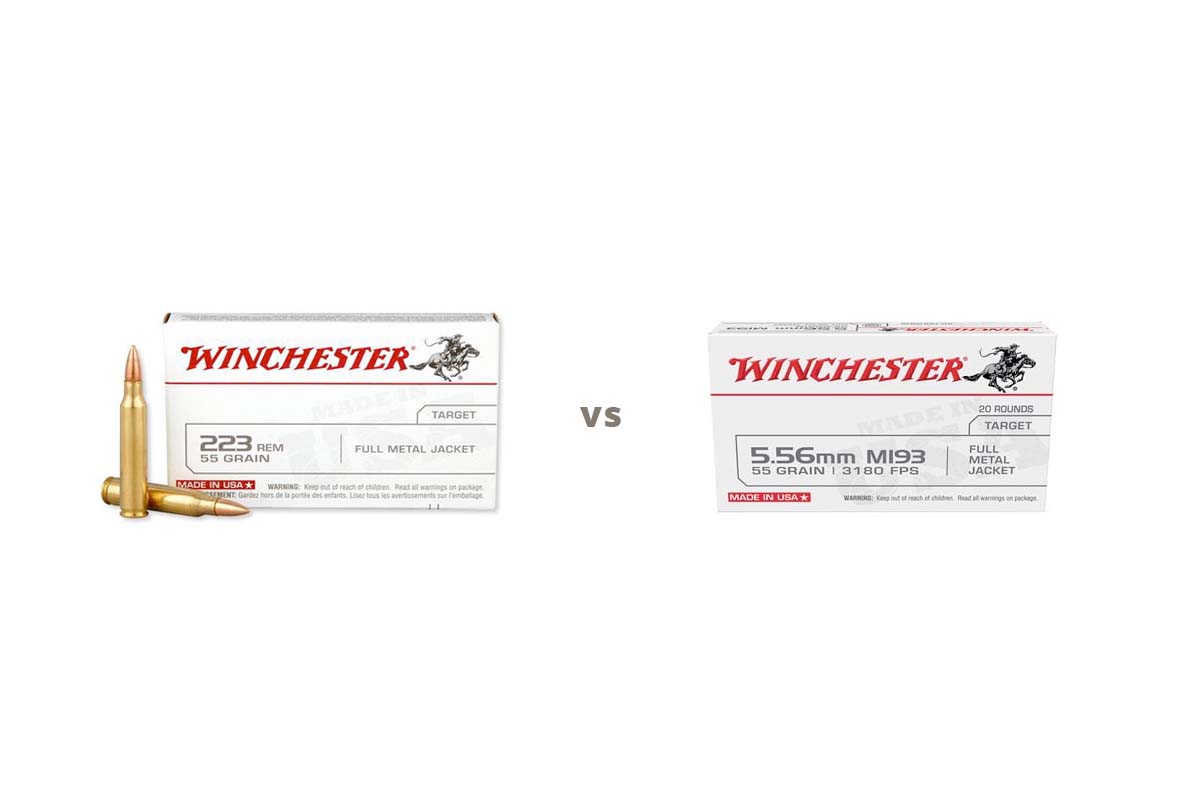
If you are looking to make your first AR-15 purchase and want to buy one chambered in the popular 5.56 or .223 Remington caliber, look at the differences before making your purchase decision in this 5.56 vs. 223 comparison.
We have covered several other calibers, including 22LR and .223/5.56, and 300 Blackout vs. 5.56/.223. Both of those provide important information for anyone looking to make a purchase decision on a rifle.
We touched on the difference between 5.56 vs 223 Remington in our .22 vs. 223 articles, but we wanted to break it down a little more in-depth since we didn’t cover the case difference.
Later in the article, we will touch on 223 Wylde vs 5.56 Barrel.
First, I think it’s always important to know where a cartridge came from and like most cartridges, 223 has a parent cartridge that the design originated from and was modified to create the 223 Rem. The parent cartridge of the 223 Remington is a very similar 222 Remington, both rounds have a .22 caliber bullet but the 223 Remington cartridge edges its parent in performance.
The 5.56 NATO has a higher pressure than the 223 round and is one of the two major differences.
The 5.56 NATO pressure is about 58,000 psi and the 223 round is approximately 55,000 psi.
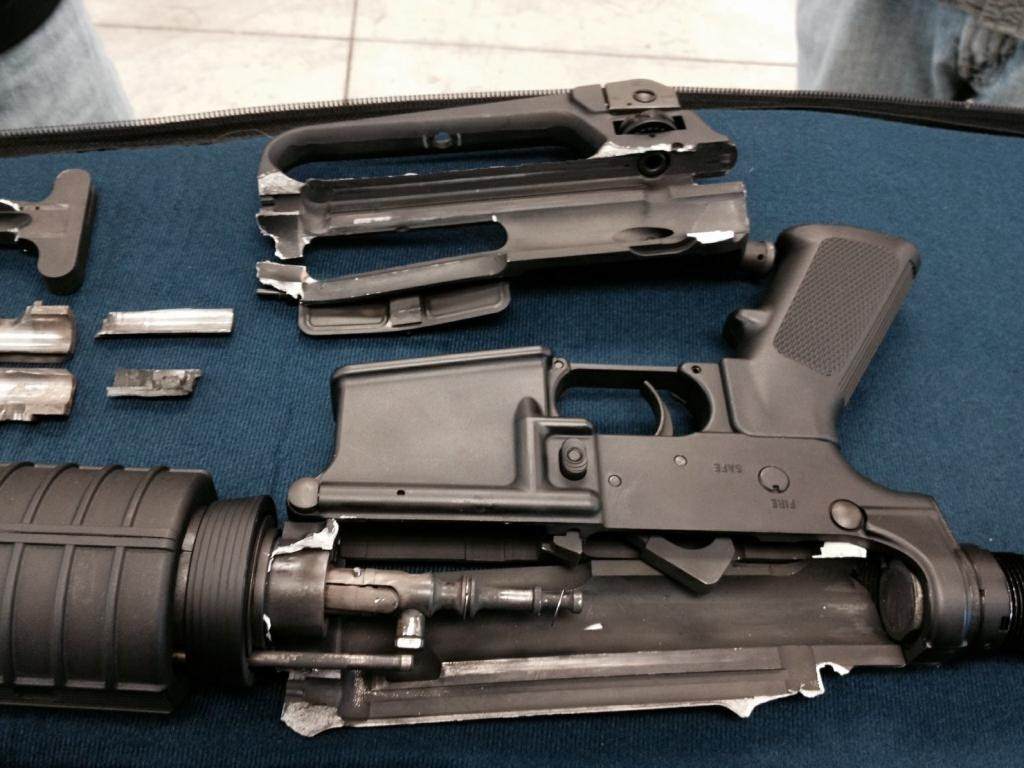
While that doesn’t seem like much on its face, a mere 3,000 psi, the case difference in the chamber balloons it to a 10,000 psi difference. This can cause barrel ruptures and could be dangerous for the shooter and the equipment.
Let’s talk some about the case difference.
The other difference between the 5.56 cartridge and the .223 cartridge is the longer throat on the casing.
The 5.56 NATO has a .125″ longer throat. This allows for an additional grain of powder to be loaded in the cartridge and gives the 5.56 NATO the performance it’s known for.
You shouldn’t.
The issue with firing a 5.56 round in a .223 chambered rifle is the pressure. Yes, the round will go bang, and you may not notice issues firing just one round.
But due to the longer throat on the NATO chamber, you’ll reach pressures of 65,000 psi or more.
The normal pressure for a .223 round is 55,000 psi, and a 10,000 psi increase is NOT safe and could cause harm to the gun and the shooter.
What about the inverse? Shooting a 223 Remington cartridge through a 5.56 rifle.
The inverse is perfectly safe when it comes to pressures when shooting the round. But just because it will work doesn’t mean it will work to the best of its performance ability.
It’s always wise to match your ammo with the correct chamber. When you shoot a .223 round in a 5.56 NATO chamber, the optimal 55,000 psi won’t be reached, velocity, thermal ballistics, and performance will suffer.
You may not notice it but know its performance is depreciated. It’s more noticeable when you start shooting it through shorter barrels with shorter-length gas systems and could even cause the rifle not to cycle correctly.
The cost of 5.56 and .223 are nearly the same. Most of the time it boils down to which is in stock. Right now 5.56 ammo seems to be easier to find in stock than .223 Remington.
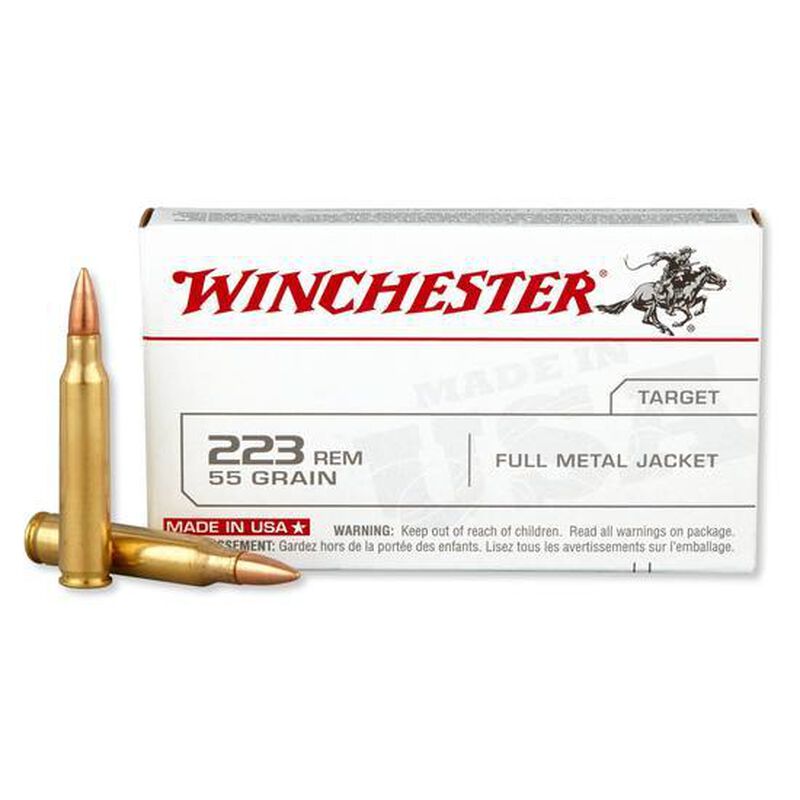
If you are running a 5.56 rifle, use whatever ammo you can find, be it .223 ammo or the 5.56 ammo.
Inventory was scarce in 2021 but 2022 is looking up and if you want to see in-stock .223 and 5.56 check Palmetto State Armory and Lucky Gunner.
Many people will tell you to buy a 5.56 rifle because you are safe shooting either 5.56 or 223 Remington. Choosing a 5.56 over .223 chamber is excellent advice when ammo is expensive and scarce like it is now.
There is another option: .223 Wylde.
Bill Wylde created .223 Wylde to make a chamber that could fire the .223 Remington and the 5.56 NATO rounds safely. The .223 Wylde chamber could handle the pressures of the 5.56 NATO round, and the performance for the .223 round was not as degraded as it would be in a 5.56 NATO chamber.
It became extremely popular with match shooters due to its ability to shoot both 223 and 5.56 rounds and even the heavy 60 grain bullets used in shooting competitions.
Personally, I like the .223 Wylde chamber and have bought many Ballistic Advantage barrels chambered in .223 Wylde.
This is a good option if you want to have the best of both worlds, and the best part is there isn’t any crazy premium on the price for the .223 Wylde chambered barrels.



I own the DPMS (Panther I believe) AR-15 and I’ve been shooting both 5.56 and .223 Remington in mine.
I couldn’t tell you if one shoots better than the other.
Both have a very loud BOOM!, and both hit my target a hundred yards down range with (I feel for me at least) pretty tight grouping, using a twelve inch splatter target.
One of my ARs is a DPMS ban model from the 90s it is marked 223 rem , using a small bore gage set , we checked the throat,, it measured longer , it is gas implement, fixed stock and handle , heavy barrel and I built a custom break on it , wonderful gun , I shoot Quality over the counter Ammo 223 or 5.56 out of it , I own a Ruger SR-556,,, in 5.56 Nato , with three position adjustable gas block, and stainless barrel, both great guns, butttttt do recommend checking the throat of older 223 rem camber weapons, I do prefer the
Thank you for the breakdown great info. I have the Smith and Wesson M&P AR15 5.56/.223. I like using the 5.56. I have fired both even in the MILITARY.