Ready to see what we have coming?
Lynx Defense will release some new things soon. Let us deliver them right to your inbox!

Lynx Defense will release some new things soon. Let us deliver them right to your inbox!
We may earn revenue from product links on this page and participate in affiliate programs. Learn More ›
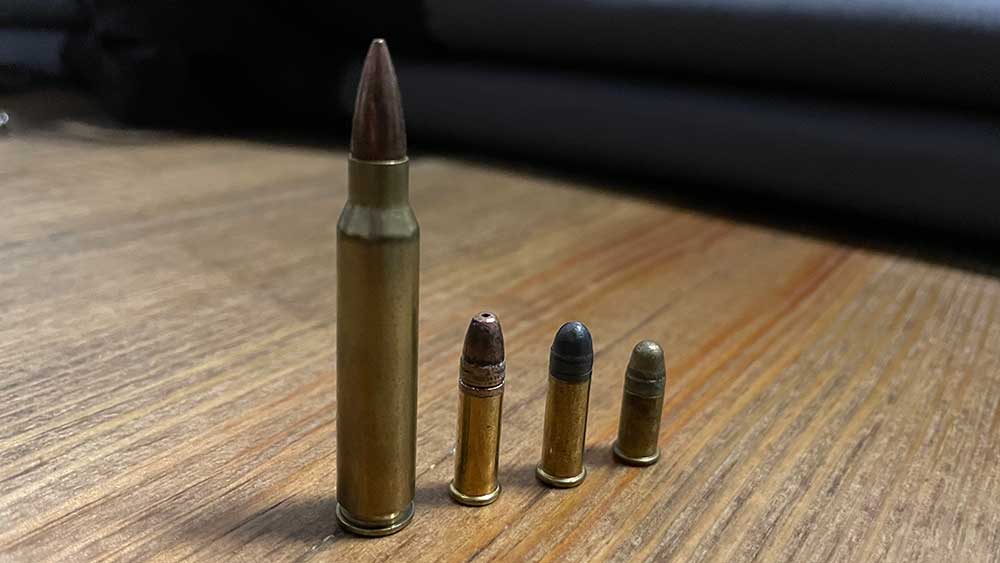
Want to know the difference between 22LR vs 223? Let’s begin! Shooting is a huge part of my life. My father raised me around guns and taught me the basics when I was so young. I can’t even remember the first time I shot one.
However, I do remember being terrified of guns. I was afraid of the recoil. They were loud. If you tried to get me to shoot one I wasn’t familiar with, I would balk at the thought. Thus the .22LR was my saving grace. A small, fun, no-kick round that left me wanting to shoot more than I wanted to do anything else in the world.
The Colt Huntsman became my best friend as I shot it in the Western Maryland mountains, where my dad grew up. We would visit my grandfather and take a full load of hunting rifles and “my” coveted Colt Huntsman .22. I would shoot that gun for hours, hardly spend any money, and leave feeling like I was king of the shooting world. I would later learn to love guns like the Browning BL22 lever action .22 and nearly any gun I could get my hands on.
But alas, I wasn’t the king of the shooting world. I was a 10-year-old boy living the dream.
While I’m still no gunslinger or perfect shot by any means, I have grown more fond of all guns, including the ever-popular .223 (5.56 NATO) round and the AR or modern sporting rifle platform.
But you might wonder how one could compare a .22LR to a 5.56/.223? One is a “high powered” round, and the other is for squirrel hunting and plinking. But it’s not all that simple.
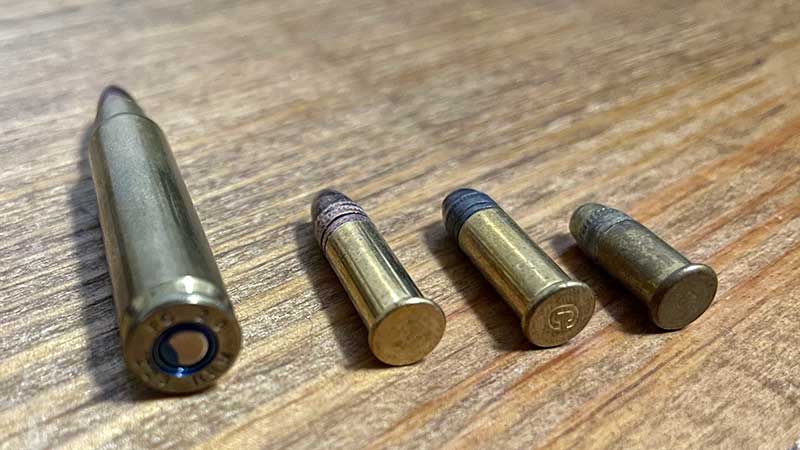
Well, this is relatively easy to explain. You can see they are clearly different for a layperson looking at a fully assembled .22LR round and a .223 or 5.56 round.
People often misuse the term caliber. Caliber is the groove diameter of the bore. Calibers are expressed in 1/100 of an inch, which is what determines the diameter of the projectile.
When they say .223 and .22LR are the same, the rounds have the same bullet diameter. While the casing for the rounds are not the same and the bullets may look wildly different, they measure the same diameter of .223″.
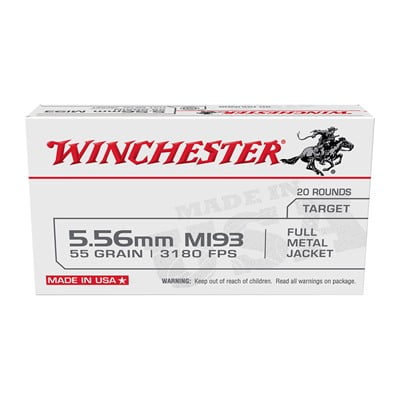
5.56mm is just the metric equivalent of .223″. Since the metric system is a far more popular unit of measurement globally, NATO (North Atlantic Treaty Organization) uses 5.56 instead of calling it .223 Remington.
But .223 and 5.56 are different, my buddy says so!
Well, your buddy is right. BUT, and that’s a really big but, they are dimensionally identical except in minor areas. You probably couldn’t tell the difference if I handed you one of each round.
The largest difference in the .223 and the 5.56 NATO round will be how hot the load is, or you know, it’s got more powder.
The biggest thing you need to be concerned about with this is the chamber pressures. With the introduction of .223 Wylde, the standard .223 barrel/chamber has become a thing of the past. The 5.56mm NATO round typically has a higher PSI chamber pressure and 5.56MM shouldn’t be shot through a .223 chambered rifle. But a .223 round can be fired just fine through a 5.56mm rifle.
The biggest takeaway is that the amount of powder is the biggest difference in the .223 vs. 5.56mm round.
That’s an interesting and somewhat valid question after someone tells you they shoot the same size round.
After all, the .22LR is cheaper, sometimes easier to find, has less recoil, is the most common round globally, and the guns are typically lightweight, and so is the ammo.
But, while the bullets are the same diameter, they are not the same grain.
WAIT A DANG MINUTE, WHAT DO YOU MEAN, GRAIN? YOU ALREADY SAID THEY WERE THE SAME SIZE.
I know, I know. We have to address yet another part of a bullet. The grain of a bullet literally refers to its weight.
Again, the grain refers to the weight of the bullet only. It does not include the case, powder, or primer. So we are just talking about the part that flys through the barrel and strikes the target.
Bullets come in various grain weights, giving a bullet different flight trajectories, thermal ballistics, and velocity.
Choosing a grain can often depend on several factors including but not limited to the following:
After you ask yourself some of the above questions, researching what grain bullet to buy becomes a much easier task. If you only care about sending your rounds through paper targets for fun then cost is gonna be the most important factor.
So what grain bullets are available?
Commercially available, .22LR ammunition typically comes in grains between 20 and 60 grains, and velocities vary from 575 to 1,750 ft/s (feet per second).
We aren’t going to get into the feet per second, flight trajectory or thermal ballistics, or velocity because I’m not qualified enough to speak about it outside of laymen’s terms explanations.
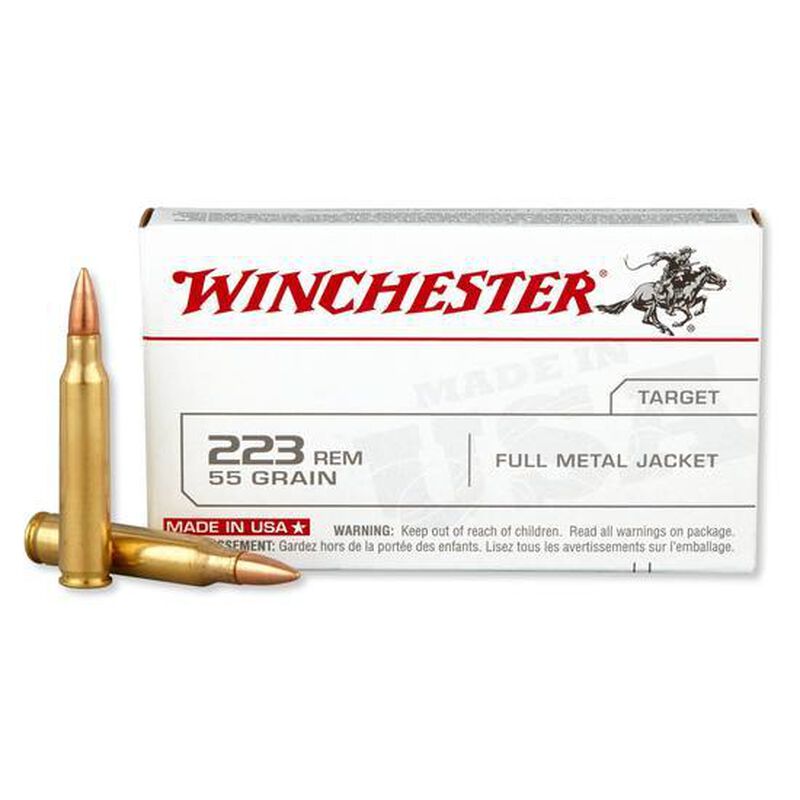
Most commercially available .223/5.56 NATO ammunition falls between 35 to 85 grains. The varying grains give the fired round different properties during flight and upon impact. The most popular grain weight for the .223 / 5.56mm round is 55gr or 55 Grain.
Again, we won’t get into the science because I’m not qualified to speak on ballistics in scientific terms.
Recently both 22LR and 223 ammo can be found in stock again. You can check sites such as Brownells, Palmetto State Armory, Lucky Gunner, True Shot, and Guns.com for available ammo if you are shopping for some.
One of the major differences between 22LR vs 223 is the quantities that each ammo is sold in.
22LR is typically sold in 50, 250, and 500 round blocks. They are called blocks because the packaging is typically blocked-shaped and holds a large number of 22LR rounds.
223 is sold in 20-round boxes and is usually sold in bulk increments of 500 and 1000 rounds.
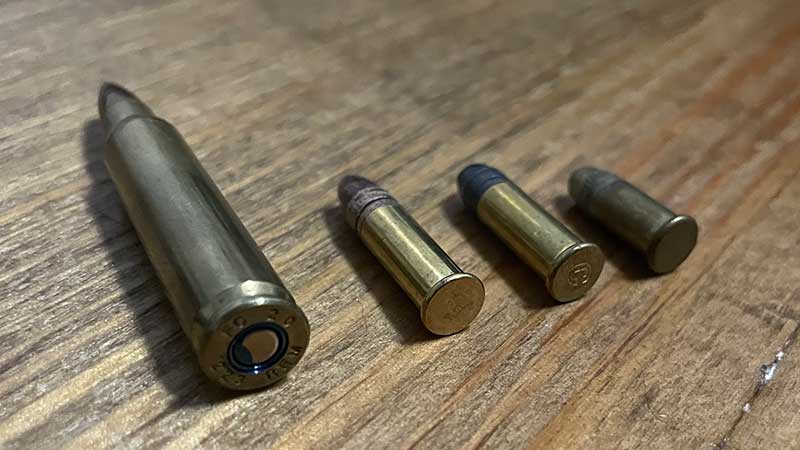
One of the main differences in the .22 round, and the 5.56 round is rimfire and centerfire.
Every round has a primer. When the primer is struck, it ignites a spark that ignites the powder that expands, causing the bullet to shoot.
The primer on a 5.56mm centerfire round is in the middle of the casing and is typically a circle. On the .22 round, the primer is contained in the rim of the round and can be struck anywhere on the rim to spark the powder.
Centerfire rounds are known to be more reliable and consistent when firing than rimfire, which can sometimes not fire when struck.
Manufacturing processes are always improving. While I’ve had nothing but good experiences with all of the .22 LR rounds I’ve had lately, it still carries the stigma of being a less reliable round than the centerfire 5.56 round.
The .22LR round is great in range guns like the KelTec CP33 and the Ruger SR22 pistols. In contrast, you can use the 5.56 round in serious mission rifles such as the Noveske N4 PDW and other AR-15 patterned rifles.
To learn more about 5.56, check out our 5.56 vs 300 Blackout breakdown.




This is def a dumb question but I read the article because I need the education. So can I shoot a 22LR through a 5.56 AR? I am training for tactical games and sounds like the 22LR is the way to go for competition and lighter carry. If I can shoot the .223, .22LR, and a 5.56 through the same barrel then it’s a no brainer I need to buy a 5.56.
The barrel isn’t an issue when shooting 22LR through 5.56/.223 but you will need a specialized bolt and magazine at a minimum for it to work correctly. CMMG makes a conversion kit for ARs.
Prepper, 223 and 22 do not have the “same basic bullet size”. Only the diameter is the same. The 223 bullet is longer and therefore heavier and is backed up by more propellant. World of difference on impact. Both rounds are lethal, but the 223 is even more so. A 22lr can take down a deer, but more powerful rounds are used for a quicker, more humane kill. Neither is “just a small bore”. Lethal!
Thanks, exactly what I needed to help me understand the difference between a 223 and a 22. Same basic bullet size, difference being the grain and powder. But, it arises a new question. Why would anyone use an AR15 for hunting, if it’s just a small bore?
I agree, nice article, good information.
Bul166, i too, dont understand, what article are you reading where 7.62 is mentioned?
I dont see 7.62 in print here ?? Even the Noveske he mentions is chambered in 556.
Good stuff, I think i will go out and shoot some more!
thanks
Great article little bro! I remember the days you wouldn’t shoot anything but a .22. Guns and ammo have always been apart of our family but you sir have taken it to the next level. Keep up the good work and honest reviews. Still waiting on lynxdefense.com to come out with a shotgun bag for us waterfowl hunters. Proud of you little bro. Pew pew pew
7.62 not 5.56?? If you’re referring to .223 being similar to/same as/etc. then idk what you’re saying. As written in article.223 & 5.56 NATO are very similar (pressure variables being biggest difference). But .223 & 7.62 aren’t nearly the same or even that similar. Depending on what 7.62 you’re referencing (I think you mean 7.62×39) there’s different comparisons. 7.62×39 is the “traditional” AK (Kalashnikovs) round & has similarities to a 30-30 Winchester. 7.62×51 is a different animal altogether and is akin to a .308.
I’m not sure why everyone is commenting about 7.62 in this article? The only time 7.62 is mentioned is in this comment section.
Yeah but… That’s a 762 round, not 556…
Not sure where you are seeing a 7.62 round in this article…
Great article, especially explaining it in layman’s terms. If I had to add anything to it is that a military round 5.56 NATO are full metal jacket. This means that are less likely to expand than a equivalent hunting round in any configuration (.22, .223 or hunting 5.56).
Thanks
Very informative article, i own both a 223. And a 22LR, i use the 223. For hunting, (in windy conditions hig in the Mountains) because of the hig velocity of the bullet i doestn get affected in the same degree as a slower traveling bullet as the 22.LR.
The 22.LR i bacikally my shoot for fun at the range gun, prehaps getting rid of some rats, mice, and destructive crows now and then.
Great article, cleared up a few questions for me but I have another question you might be able to answer. Many years ago I bought a Colt AR 15 match with a heavy barrel. The store I got it from said I could shoot 223 or 556 ammunition. The rifle is marked 223. Can I shoot both rounds?
Hey Terry, thanks for the compliment on the article we actually did a complete article on 5.56 vs 223 which will likely help answer your question.
Both rounds will chamber and fire but it is NOT recommended. The 5.56 has a higher chamber pressure.
Well done Michael…very well done!
Learn something new everyday!
Thanks for this article!
nice article, you cleared up a lot of my misconceptions.
Great explanations. 223’s are becoming more Common here in NL for caribou , seals and even moose as long carry times are tiring.
Good article. Nicely done.
Awesome read, thanks
Nice Article Brother! Gotta love 22lr
Big J
Good article. 22LR is a fun gun to shoot. I used to have a Ruger 10/22. Fun stuff.